Inpatient Program - Closed | Nu Life Medical Group Outpatient MAT Program - Open

Understanding Wet Brain (Wernicke-Korsakoff Syndrome): Prevention to Recovery

Best alcohol detox centers Port St Lucie Florida explains wet brain

Our alcohol rehabs Port St Lucie medial teams witness wet brain too often. We know alcohol abuse takes a toll on both the mind and body, but few are aware of its potential to cause life-altering neurological conditions. One such condition, Wet Brain, or Wernicke-Korsakoff Syndrome (WKS), can severely impact memory, behavior, and overall cognitive function. The good news? With awareness and timely intervention, Wet Brain is both preventable and treatable.

This guide explains what Wet Brain is, how it develops, and the steps you can take to prevent or treat it, offering clarity, hope, and support for individuals facing alcohol use challenges and for families seeking help.

What is Wet Brain? | Alcohol Rehabs Port St Lucie

Our alcohol rehabs Port St Lucie, Florida doctors felt the need to speak about wet brain. Wet Brain, formally known as Wernicke-Korsakoff Syndrome, is a severe neurological condition caused by a deficiency in thiamine (Vitamin B1)—an essential nutrient for brain function. Alcoholism, a leading cause of Wet Brain, interferes with the absorption of thiamine, leaving the brain starving of the nutrients it needs.

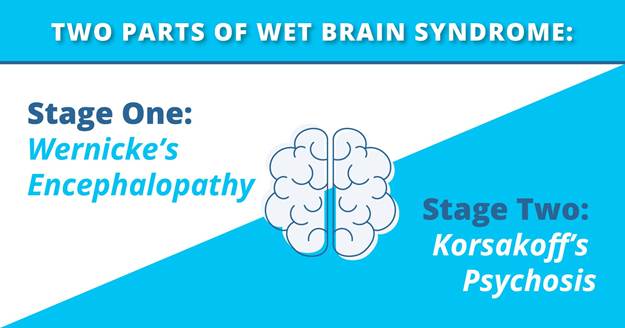
This condition progresses through two stages:

  1. Wernicke’s Encephalopathy (Acute stage)

This is the initial stage, characterized by confusion, poor coordination, and abnormal eye movements. Without immediate treatment, it can become life-threatening.

  1. Korsakoff Psychosis (Chronic stage)

If left untreated, Wernicke’s Encephalopathy advances to Korsakoff Psychosis. Here, brain damage becomes more pronounced, leading to severe memory loss, hallucinations, and the inability to form new memories.

Symptoms of Wet Brain Explained by Alcohol Rehabs Port St Lucie
Wet Brain treatments by Alcohol Rehabs Port St Lucie

Our alcohol rehabs Port St Lucie medical team felt the need to explain symptoms of wet brain. The symptoms of Wet Brain vary depending on its stage, but common signs include both physical and cognitive impairments.

Early Symptoms (Wernicke’s Encephalopathy):

  • Mental confusion or disorientation
  • Difficulty with balance or coordination (ataxia)
  • Unusual eye movements, including rapid eye twitching (nystagmus)

These symptoms often emerge suddenly and should be treated as a medical emergency.

Advanced Symptoms (Korsakoff Psychosis):

  • Severe memory impairments, particularly forming new memories
  • Confabulation (fabricating stories to fill memory gaps)
  • Hallucinations
  • Personality changes, such as apathy or irritability

How Does Wet Brain Develop?

The main cause of Wet Brain is chronic alcohol use, which interferes with the absorption and storage of thiamine. Over time, alcohol also impacts the liver’s ability to process nutrients, compounding the problem.

Other factors that increase the risk of Wet Brain include:

  • Malnutrition is caused by poor dietary habits common in individuals with alcohol dependence.
  • Medical conditions like gastrointestinal disorders that impair nutrient absorption.

Unsurprisingly, those with prolonged alcohol misuse and severe nutritional deficiencies are the most at risk.

Can Wet Brain Be Treated? | Alcohol Rehabs Port St Lucie
Symptoms of Wet Brain Explained by Alcohol Rehabs Port St Lucie (1)

Neuro Psychiatric Addiction Clinic alcohol rehabs Port St Lucie treats wet brain often, and yes, wet brain is treatable, but success depends on how early treatment begins. The earlier an individual seeks help, the greater the chances of reversing symptoms and preventing permanent brain damage.

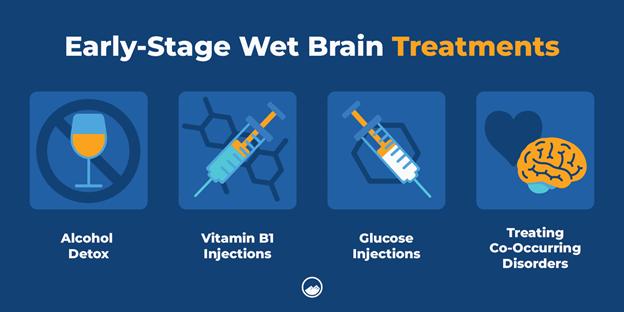
Treatment Options Include:

  1. Thiamine Supplementation

Administering high doses of thiamine (Vitamin B1), often via IV, is the first line of treatment. This may stabilize acute symptoms like confusion and balance issues.

  1. Alcohol Abstinence

Detoxing from alcohol is essential to stop further damage. Enrolling in a structured alcohol rehab program provides the necessary support for recovery.

  1. Nutritional Support

A balanced, nutrient-rich diet can help restore the body’s vitamin levels, especially thiamine, and support brain health.

  1. Therapeutic Interventions

Therapy, including occupational and speech therapy, can help individuals regain cognitive and physical functions lost to Wet Brain.

While early intervention can lead to moderate recovery over time, advanced cases often result in lasting cognitive and neurological challenges.

Preventing Wet Brain

The best way to prevent Wet Brain is to address its root causes—alcohol dependence and poor nutrition. Key prevention strategies include:

  • Reducing Alcohol Use: Seek help through alcohol detox and recovery programs to ensure long-term abstinence.
  • Eating a Balanced Diet: Focus on foods rich in thiamine, such as whole grains, lean meats, eggs, and leafy greens.

For those at risk, regular health check-ups and early intervention can be life-saving.

Seeking Help at Neuro Psychiatric Addiction Clinic Addiction Clinics Alcohol Rehabs Port St Lucie Florida
best alcohol detox Port St Lucie can help with alcohol detox centers and inpatient drug rehabs Port St Lucie Florida

Neuro Psychiatric Addiction Clinic alcohol rehabs Port St Lucie, Florida treats wet brain. We also treat alcohol addiction, drug addiction, pregnant women with addiction and mental issues, and any mental health issues. We accept some health insurance and can get you in today. If you or someone you love is struggling with alcohol addiction and its physical toll, know that you’re not alone. Support is available.

Call Neuro Psychiatric Addiction Clinic alcohol rehabs Port St Lucie Florida now at 772-281-5466, we can provide the tools and resources you need to reclaim your health and prevent conditions like Wet Brain. Whether you’re exploring recovery options or dealing with the impacts of alcohol use, seeking guidance from professionals is a crucial first step. The sooner you act, the better the chances of recovery.

Wet Brain is a serious but preventable outcome of heavy alcohol use. Recognizing early symptoms, seeking treatment, and making lifestyle changes can save lives and improve outcomes dramatically. Taking proactive steps today not only prevents irreversible neurological damage but also offers a pathway to renewed health and clarity.
Begin the first day of the rest of your life

To find out more contact our team

RELATED ARTICLES

Shari Phillips

Utilization Review Specialist

coming soon

Wayne Wilks, MA, MBA, MHA, MHRM

Lead Therapist

Wayne Wilks’s journey in the substance abuse industry is a testament to his enduring commitment and expertise. With more than a decade of professional involvement, Wayne has cultivated a notable career, significantly impacting the lives of individuals battling addiction. His career began at the grassroots level, where as a Behavioral Health Technician, he was on the front lines, not just interacting with clients, but deeply understanding their needs, and grappling with their daily intricate challenges. This foundational experience immersed him in the practical realities of treatment and care, laying the groundwork for his ascent to more influential positions.

His exceptional leadership and strategic capabilities marked his rapid rise to the role of Director of Operations. In this position, Wayne took on a multidimensional role that demanded administrative oversight and foresight in policy development and implementation, resource management, and staff supervision. His ability to adeptly manage and balance these responsibilities has significantly enhanced his organization’s operational efficiency and treatment efficacy. Under his leadership, the organization saw an increase in operational efficiency and an increase in treatment efficacy.

Alongside his leadership responsibilities, Wayne’s role as a Telehealth therapist is a testament to his adaptability and forward-thinking approach in the evolving healthcare landscape. This modern adaptation to the changing needs in healthcare provision, particularly in response to increasing demands for remote counseling services, underscores his versatility and proactive approach to embracing technology in expanding access to support services. Wayne’s empathetic demeanor and deep commitment to establishing authentic, therapeutic relationships ensure his sessions are reassuring and transformative, providing a virtual lifeline to those who might not otherwise engage in traditional therapy settings.

Educationally, Wayne has reinforced his practical skills with robust academic training, holding multiple master’s degrees in Counseling, Business, Healthcare, and Human Resource Management. His scholarly pursuits have been complemented by various certifications targeted at substance abuse treatment, which equip him with advanced methodologies and techniques to strengthen his practice. 

Wayne’s continuous personal and professional growth philosophy has seen him seek further enlightenment and capabilities through ongoing education and participation in industry networks. His commitment is reflected in his active engagement with professional courses, workshops, and seminars, where he aims to remain at the cutting edge of treatment advancements and research.

A revered figure within the community and a beacon of hope for many, Wayne Wilks embodies the qualities essential for profound work in substance abuse treatment—passion, empathy, and an unyielding resolve to facilitate recovery and empower individuals. Over the skyline of his career, Wayne has demonstrated outstanding achievements and significantly contributed to shifting addiction treatment landscape towards more innovative and inclusive practices.

Selena Linares, LMFT, MBA

Clinical Director | Licensed Marriage & Family Therapist

Selena Linares, LMFT, MBA is a seasoned Clinical Supervisor and Licensed Marriage and Family Therapist with nearly a decade of experience across behavioral health, hospice care, substance use treatment, primary mental health, and education. She brings a rare blend of clinical expertise, business leadership, and entrepreneurial insight which allows her to lead with both heart and strategy.

With a background spanning clinical practice, program leadership, education, and management, Selena is known for her collaborative leadership style and her ability to bridge clinical excellence with organizational effectiveness. She works closely with multidisciplinary teams, executive leadership, and frontline staff to ensure high-quality, ethical, and client-centered care while fostering strong, supportive workplace cultures.

Selena’s leadership philosophy is rooted in collaboration, transparency, and accountability. She believes exemplary client care begins with empowered clinicians, clear systems, and leaders who value both people and outcomes. Her approach brings teams together around shared goals, strengthens clinical integrity, and elevates the standard of care across organizations.

As a clinician, leader, and entrepreneur, Selena is deeply committed to creating environments where individuals, teams, and communities can truly thrive.

Samantha Kelly​

Director of National Business Development & Admissions Coordinator

I am a dedicated and passionate professional with extensive experience in business development Admissions and marketing. I have an incredible passion for showing others that there is a light at the end of this dark tunnel if someone truly wants it.
Being in recovery myself I understand the struggles of addiction and alcoholism. I Started this Career path in 2009. With multiple years of experience, I bring a multi-faceted approach and am always seeking new ways to make a difference in the lives of those I work with.

Kim L. Buckner

Facilitator

As a Substance Abuse Motivational Speaker, Pastor, Peer Advocate, and Facilitator. Kim helps clients avoid relapse by understanding their triggers. Those people, places and things that can cause craving, as well as internal triggers like feelings, thoughts, or emotions. Kim also clients with identifying and building healthy relationships now that they’re clean and sober.

Kim’s background includes extensive experience as a motivational speaker and work in faith-based organizations helping youth and adults alike. He says he is motivated by giving back to the community, understanding, and not judging who she comes into contact with. Kim’s favorite quote is by Dr. Raymond Johnson: “The respect given to others rebounds to the giver to deny the scared in the Other is to deny it in oneself.”

Madison Knowles

Mental Health Therapist

My name is Madison Knowles, I am a Mental health therapist at NPAC. I am a single-mother of two and I have a daughter who is globally delayed and has been diagnosed with autism. I have been in this industry since I was 16 years old, as I was fascinated with human behavior. I obtained my masters in applied behavioral analysis and started off working with people with disabilities. I then found my love for counseling when I worked with juveniles who had mental health and substance use issues. I then decided to go back for my mental health therapy license after that and working in a forensic treatment center. I went on to obtain my therapy credentials and since 2017, I have also been working on my PhD in forensic psychology in which I am currently working on my dissertation. I am inspired by change and how resilient people can be. My favorite inspirational quote is “Some will, Some won’t, So what, NEXT!!!” This quote has inspired me to try, try, and try again no matter how hard life gets, someone will give you a chance eventually. As a therapist at NPAC, I have been given the opportunity to work with diverse populations such as in substance use and mental health and I am known for my work with people on the schizophrenic spectrum as well as with other clients with other severe conditions including personality disorders.

Megan Carmona, LMHC

Lead Therapist

Our Lead Therapist, Megan, is a bilingual Licensed Mental Health Counselor who specializes in working with adults who struggle with addiction, anxiety, depression, and trauma. As Lead Therapist, she provides individual, family, and group therapy sessions to our clients.  Megan says “I am very passionate about therapy, especially about supporting my clients in exploring their strengths and identity. My goal is to provide individuals with the tools that can help them achieve independence in coping with their challenges and facilitating personal development.” In her free time, Megan enjoys watching docu-series and playing video games with her family. Her dream is to own acres of land so she can care for vulnerable animals, especially old dogs, cats, and horses. 

Ronn Daigle, MSW

Therapist, Utilization Review Clinician

Ronn Daigle services as a Therapist and Utilization Review Clinician at the Neuro Psychiatric Addiction Clinic. He has been working in the field of substance use disorder treatment since 2011, with experience in all facility-based levels of care. Ronn earned, both an Associate of Arts in Psychology (2013) and Bachelor of Science in Human Services, with an Addiction Studies Concentration (2015) from Indian River State College. 

Ronn additionally earned a Master of Social Work degree in 2021 and is a current Registered Clinical Social Work Intern working toward licensure (LCSW). He describes himself as detail oriented, and solution focused.

Ronn says: “There is nothing more fulfilling than working with someone who doesn’t believe in himself or herself, and being there in the moment with them when the belief begins. We work with individuals who come to us at a point and time in their respective lives where they do not believe that change for others is possible; let alone for themselves…throughout the process they eventually come to a point where they realize that change is not only possible, but achievable.”

Robert Lehmann, MHSA

Chief Operating Officer

Bob Lehmann is the Chief Operating Officer at the Neuro Psychiatric Addiction Clinic. He has a Master’s Degree in Human Services Administration with a concentration in Mental Health Administration and over twenty-five years of experience as a senior executive at addiction and mental health treatment facilities.

One of the reasons for his commitment to excellence in addiction treatment was his experience related to family members who suffered from the disease of addiction. Bob has been actively involved in community organizations throughout his career. Recently he was one of the founders of the Florida Addiction Treatment Coalition (FATC) and is its present Vice President. FATC was designed to bring together treatment executives in Florida to advocate on behalf of treatment facilities and the clients they serve adhering to a foundation of integrity and service excellence.

Jose R. Toledo, M.D.

Owner and Founder

A well-rounded and accomplished individual, Jose R. Toledo, M.D., is the Owner and Founder of Neuro Psychiatric Addiction Clinic.

Dr. Toledo is a neurologist with 33 years of experience and has been in private practice since 1991 on the Treasure Coast of Florida. He completed his neurology training at the State University of New York and his Fellowship training at the University of Pittsburgh in Epilepsy and Clinical Neurophysiology.

He also completed 24 months of acute inpatient psychiatry at the Western Missouri Mental Health Center, University of Missouri in Kansas City. In 2008, Dr. Toledo participated in and was certified in the continuing medical education activity entitled “Buprenorphine and Office-Based Treatment of Opioid Dependence” from The Medical University of South Carolina during which began his quest to found and head Neuropsychiatric Addiction Clinic.

Dr. Toledo is a brain specialist with particular competence in addiction medicine and out-patient detoxification treatment and integrates the fields seamlessly. He is certified to prescribe Buprenorphine (Suboxone). He incorporates his background in neurology into the addiction field. Dr. Toledo is member/fellow of The American Medical Association, The Florida Medical Association and The American Society of Addiction Medicine